Stage one: ship one useful path
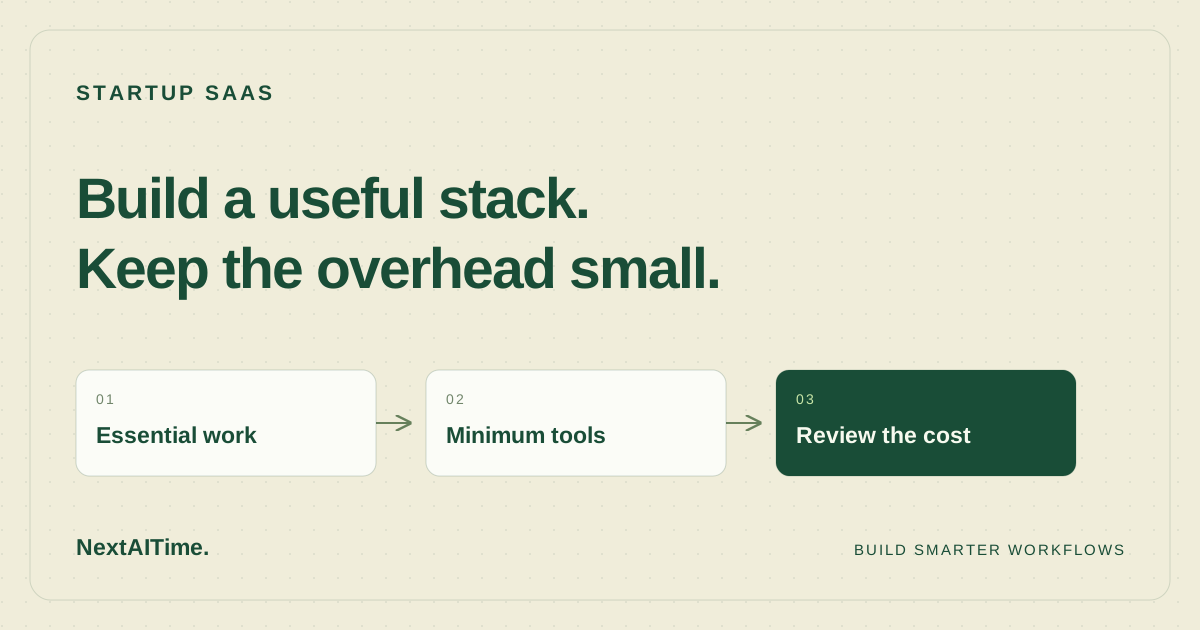
For a prototype, choose a repository, a deployment target, and a way to inspect failures. A sample scheduling app might need one page to create an appointment and one view to retrieve it. Avoid buying a queue, search service, analytics suite, and automation platform before the basic path has a user. Write down what can fail and how you would notice.
Cloudflare Workers is one concrete hosting candidate: its official documentation describes a serverless platform for building and deploying applications, including frontend assets and backend APIs. That establishes a role in the stack, not universal suitability. Check your framework, runtime dependencies, database connectivity, and background-work needs before committing. A local build passing does not establish that every dependency will run on the deployment target.
Stage two: make customer data durable and private
When people begin saving meaningful records, give data design more attention than dashboard polish. Define who owns each record, who may read or change it, and how deletion works. Test access with two separate user accounts. Store credentials outside the repository and production configuration outside sample files. Make a recovery plan before an accidental deletion becomes a support incident.
Supabase's database overview states that every project includes a full Postgres database and describes Auth, Storage, Realtime, and Edge Functions as built on that foundation. This can make it a useful candidate when your app needs relational data with adjacent services. Select the parts your product actually needs rather than treating a bundled capability as a requirement to use it.
Pay attention to the recovery boundary: the same overview says database backups do not include objects stored through the Storage API. If customers upload files, database recovery alone is therefore insufficient. Document a separate file recovery strategy and verify the backup and recovery provisions of your chosen plan. A backup feature is not evidence that your application can restore successfully.
Stage three: make releases repeatable
Once a second change can break the first customer's workflow, automate a few meaningful checks. Build the app, validate configuration without printing secrets, and test the core business path. Include a check that one account cannot retrieve another account's records. Keep a documented rollback procedure and distinguish application rollback from reversing a database migration.
GitHub Actions documents automated build, test, and deployment pipelines, with workflows defined in repository YAML files. It is a concrete option if your source already lives on GitHub. Start with a short workflow you understand. Limit deployment credentials to the needed scope and review third-party steps before giving them access. Automating a release should make its behavior easier to explain.
Stage four: support the customers you have
Add transactional email when the product needs account or activity notifications. Add billing when the product has a clear paid offering. Add a support inbox when requests need tracking. These are categories to evaluate, not instructions to purchase three services on day one. For each, inspect delivery or failure records, permissions, data export, and the process for changing providers.
Use one shared record of customer issues before introducing a complex support platform. Capture the affected workflow, severity, owner, and resolution. If the same manual task keeps interrupting development, describe its inputs and exception cases first. Then use the automation comparison to evaluate whether a workflow service would reduce that specific maintenance burden.
Stage five: add infrastructure for observed constraints
Add a queue when work needs controlled asynchronous processing and you have defined retry behavior. Add specialized search when real queries exceed what your existing database approach can support acceptably. Add richer monitoring when current logs cannot explain failures or show whether the core customer journey works. These are decision triggers, not claims that every growing SaaS needs the same services.
For an AI feature, begin with one narrow task and explicit acceptance criteria. Keep model calls behind an application interface so a provider change does not spread through every screen. Use the AI API evaluation checklist before selecting a platform, and count failed attempts and human review when estimating operating cost.
Keep a service inventory with exit conditions
Maintain a short table for each service: purpose, owner, stored data, billing unit, spending alert, recovery process, and export path. Note which services would prevent customers from completing the core task if they failed. Review the inventory when adding a subscription, changing the product, or encountering a surprising bill.
Every addition should answer one question: which observed problem does this solve now? If the answer is future flexibility without a current need, defer it. Use the stack budget guide to set a ceiling, and retire services whose purpose disappeared. A lean stack stays lean through maintenance decisions, not through a permanent loyalty to the first vendors you chose.
Sources & further reading
Primary references used for product and technical information. Features and terms can change; check the provider before committing.
- Cloudflare Workers documentation sourceAccessed 2026-10-17
- Supabase database overviewAccessed 2026-10-17
- GitHub: Understanding GitHub ActionsAccessed 2026-10-17